- The Peggie Li Letter
- Posts
- 5 Money Principles That Made Me Multi-Millionaire at Age 38
5 Money Principles That Made Me Multi-Millionaire at Age 38
Starting from $100K in Student Loans Debt

Peggie Li
January 21, 2025
At 38 years old, I realized something that completely stunned me—I had become a multi-millionaire. The word “stunned” isn’t an exaggeration because, for the past two years, I had been on a gap year, deliberately stepping away from the relentless 14-hour workdays that had defined my previous seven years as an entrepreneur.
For the first time in my life, I chose to slow down. My focus shifted entirely to healing my mind, body, and soul, nurturing my marriage, and supporting my child’s education. Ironically, during this period where I wasn’t actively chasing financial growth, my wealth continued to accumulate. It was an undeniable confirmation of a truth I had long suspected: hard work is not the path to wealth.
This realization sparked a deeper question in me—what exactly had led to my financial growth?
No Bragging, Only Reflection
Let me clarify upfront—this is not a story meant to brag. Many of my friends and family members are far wealthier than I am. I’m not here to compete or compare because the journey to building wealth is entirely unique to each individual.
Our starting points are different:
Our family backgrounds vary widely.
We were shaped by different educations and environments.
Some of us had access to opportunities others didn’t.
Given these differences, comparing myself to others—or inviting comparisons—is pointless.
Instead, the purpose of this article is to document the lessons I’ve learned from 38 years of trial, error, and reflection. If even one of these lessons sparks inspiration or helps you on your journey, it will bring me immense joy.
And if, one day, my now six-year-old son stumbles upon this piece as he navigates his own life, and it offers him guidance or strength in difficult times, then I will have achieved something truly priceless as a mother.
So here are the five money principles that transformed my life—shared with the hope that they can help transform yours too.
Lesson No. 1: Connect Money with Wisdom
There’s a quote that deeply resonated with me:
“When money is infused with wisdom, it becomes living money. When wisdom is infused with money, it becomes living wisdom.”
This idea transformed the way I think about wealth—it’s not just numbers in a bank account; it’s deeply tied to the quality of your wisdom, like the relationship between you and your reflection in the mirror.
The Missing Link in Traditional Education
Most of us grow up without ever learning the principles of wealth creation. Schools don’t teach it, and often, our parents don’t either—many of them are still struggling with their own financial challenges. As a result, we fail to connect wisdom with wealth.
For most of my life, I believed the only way to achieve success was through traditional education: go to school, get good grades, graduate from a prestigious university, find a good job, and voilà—you have wealth, status, and security. End of story.
In this framework, wisdom was equated with academic achievement, but its connection to money remained unclear. Worse, societal narratives often link wealth with greed or corruption—movies like The Devil’s Advocate paint a picture of money as inherently evil, reinforcing these stereotypes.
My Journey of Unlearning and Rebuilding
It wasn’t until I journeyed through years of education, internships, six years in corporate roles, and then seven grueling years as an entrepreneur that I began to understand the true relationship between wisdom and wealth. I came to a simple yet profound realization: money is neither good nor evil—it’s an amplifier.
If you are a person of wisdom, wealth will amplify your positive impact. But if you lack integrity or insight, wealth can magnify destructive tendencies.
I also discovered a crucial truth: your ability to accumulate wealth is directly proportional to your level of wisdom. As you expand your knowledge, sharpen your skills, and develop your mindset, your capacity to attract and manage wealth increases. Conversely, if you come into a windfall—like winning the lottery or inheriting money—without the wisdom to sustain it, you’ll likely squander it.
There’s a reason why stories abound of young celebrities, lottery winners, or heirs who end up bankrupt. Without wisdom to match their financial resources, their energy levels and decision-making skills can’t sustain the wealth they’ve been given.
Wealth Creation as a Journey of Growth
The process of wealth accumulation is, at its core, a journey of personal growth. It’s not just about the money—it’s about becoming the kind of person who can manage, grow, and use wealth wisely.
To embark on this journey, you need to embrace a mindset shift:
Wealth is noble. Far from being something to fear or demonize, wealth is a tool that allows you to amplify your values and impact.
It requires active learning. Neither schools nor families typically provide the education we need about money. You must take responsibility for learning through experience, practice, and study.
It’s a lifelong practice. Growing wealth is not a one-time goal but a continuous process that reflects your evolving wisdom.
The Greater Purpose of Wealth
I now understand that the pursuit of wealth is not about acquiring material possessions or achieving status—it’s about building a foundation for wisdom. The process of accumulating wealth teaches us discipline, patience, and strategy.
Ultimately, the significance of wealth lies in what it enables us to become: wiser, more resourceful, and more capable of contributing to the world. In that sense, wealth is not just a financial goal; it’s a tool for personal evolution.
Let us remember: money is a mirror. When we fill our reflection with wisdom, clarity, and purpose, wealth naturally follows—and it does so with meaning and impact.
Lesson No. 2: The First Step to Wealth is Eliminating Student Loans and Credit Card Debt
I’m incredibly fortunate to have never had student loans. My parents, who are nothing short of amazing, covered all my university and graduate school expenses, even for my costly master’s degree at USC. I owe them endless gratitude.
My husband, however, wasn’t as lucky. When he graduated, he carried a crushing burden of $130,000 in student loans.
A Financial Sinkhole
In the early years of our marriage, saving money seemed impossible. Each month, we were bombarded with bills for his student loans, which carried sky-high interest rates. To maintain his cash flow, he opted to pay only the minimum required, ensuring there was enough left over for luxuries like a fancy car and an expensive apartment. But this decision only compounded the problem—his loan interest kept snowballing.
To make matters worse, my husband relied heavily on credit cards. He had more than a dozen, using new cards to pay off old debts. The combination of student loans and compounding credit card interest meant that, despite our well-paying jobs, we couldn’t build any savings, let alone invest.
The Turning Point
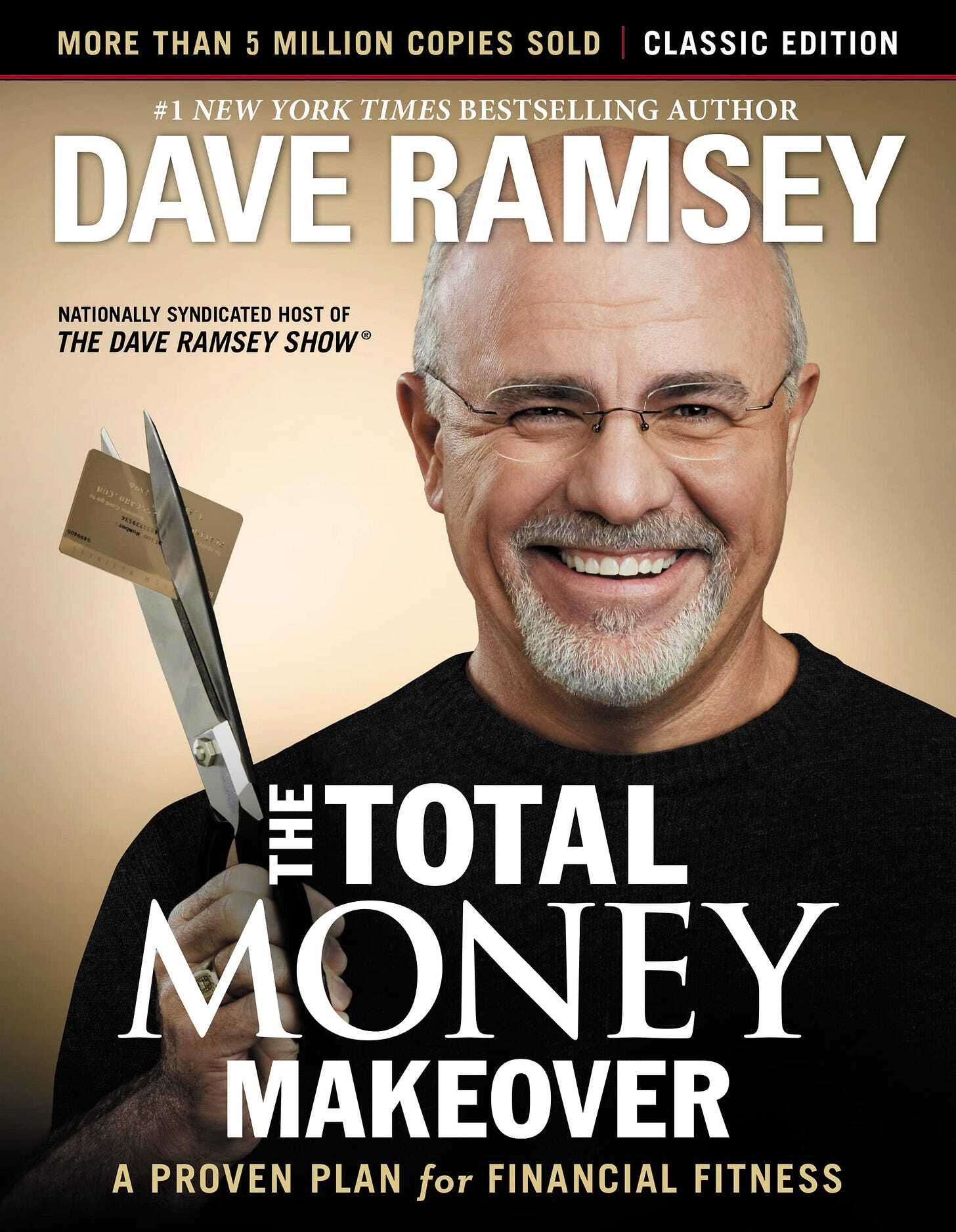
At 30, I came across The Total Money Makeover by Dave Ramsey, and it completely transformed my perspective. The book’s core principle was clear: get rid of credit card debt first and focus all efforts on paying off student loans.
Armed with this insight, my husband and I made a pivotal decision:
Cut all unnecessary expenses. We stripped our lifestyle down to its bare essentials—no more fancy dinners, luxurious vacations, or impulse buys.
Channel every spare dollar into debt repayment. We started with his smallest credit card balance, paid it off entirely, and celebrated each milestone. Cutting up the paid-off credit cards became a symbolic act of freedom and progress.
Snowball the wins. With each card paid off, we redirected that freed-up money toward the next largest balance. Within two years, by the time I was 32, we had completely eliminated my husband’s $130,000 in student loans and all his credit card debt.
The Lesson Learned
This experience taught me a profound financial truth: When you’re drowning in high-interest debt, your bank account is like the Titanic—leaking water and slowly sinking.
No matter how much you earn, if you’re hemorrhaging money to debt payments, you’ll never accumulate wealth. Instead, you’re stuck in a cycle of patching holes and bailing water—ultimately a losing battle.
The Path Forward
If you’re currently carrying significant student loans or credit card debt:
Stop all non-essential spending immediately. Scale your lifestyle back to survival mode.
Focus on one debt at a time. Start with the smallest balance, pay it off, and move on to the next. Celebrate these small wins—they’ll give you momentum and motivation.
Keep your eye on the goal. Once you’re debt-free, you’ll finally be in a position to save, invest, and grow your wealth.
This journey of cutting back and focusing on debt repayment isn’t glamorous, but it’s essential. It’s like plugging the leaks in a sinking ship—only then can you start sailing toward financial freedom.
From the moment we became debt-free, our financial trajectory shifted dramatically. That’s when we could finally start building wealth instead of trying to stay afloat. It’s not easy, but trust me, it’s worth it.
Lesson No. 3: Mastering the Use of Leverage – The Only Path to Building Wealth Within Limited Time
One of the most profound insights I gained came from Naval Ravikant's The Almanack of Naval Ravikant. He emphasizes that leverage is the key to exponential wealth creation. Without it, we are limited by our own time, energy, and skills. But with leverage, we unlock the ability to achieve results far greater than what we could ever accomplish alone.

Naval categorizes leverage into five main types:
Labor Leverage: Leveraging others' time and skills.
Capital Leverage: Using other people’s money, such as venture capital or loans.
Skill Leverage: Building wealth through your unique, high-value expertise.
Media Leverage: Creating content once but distributing it infinitely.
Product Leverage: Developing scalable products, often digital ones, that can be sold repeatedly with minimal additional effort.
Over the years, I’ve applied these principles in various ways to build my wealth:
Leveraging Capital
When I started my company, I successfully raised $5 million in venture capital. This capital became the foundation for building my business. It allowed me to hire talented engineers, designers, marketers, and product managers—essentially activating labor leverage. Together, we developed a digital product that embodied high product leverage, ultimately driving the company’s valuation to significant heights.
Beyond my business, I also leveraged capital by investing in real estate. Using bank financing to purchase properties enabled me to multiply returns far beyond what I could have achieved using only my savings.
Leveraging Skills
Early in my career, my expertise in data analysis served as a skill lever. It helped me secure positions at world-renowned companies like Fox Media, Sony Entertainment, DreamWorks, and Disney. These experiences provided the foundation for my entrepreneurial journey. Later, my skill leverage continued to pay dividends when I joined ByteDance (now the parent company of TikTok) during its early days. My equity in the company became a capital lever, as ByteDance grew into a $300 billion enterprise, significantly increasing the value of my stock options.
Leveraging Media and Products
Media and digital products represent some of the most powerful forms of leverage because they allow you to create something once and reap ongoing benefits. For instance, a well-written book, an online course, or a viral video can generate revenue and impact for years with little additional effort. This is a path I am now actively exploring, building an audience and creating content that can reach thousands—if not millions—of people simultaneously.
Why Leverage Is Crucial for Entrepreneurial Moms
As a mompreneur, time is our most precious resource. We juggle raising children, managing households, nurturing marriages, and running businesses. Time is fragmented, and the physical limitations of aging mean we have a finite window to create wealth.
This is where leverage becomes not just a tool, but a necessity. By using leverage effectively:
Every hour you work can multiply its impact.
Every person you hire becomes an investment in your future growth.
Every dollar you save can be deployed to generate even more wealth.
The Mindset Shift: From Costs to Investments
One of the most significant shifts I made was to view every effort, every hire, and every dollar spent not as a cost but as an investment in leverage. When you hire an employee, don’t just think about the salary you’re paying. Think about the exponential value they could create for your company. Similarly, every job you take should be seen as a stepping stone toward building leverage, not merely a way to cover bills.
In Summary
Leverage is the bridge between the finite and the infinite. It’s what enables you to transcend the limitations of time and create outsized returns. Whether it’s through capital, labor, media, or products, the goal is to build systems that work for you, even when you’re not working.
For entrepreneurial moms balancing the demands of family and career, leverage is your superpower. Use it wisely, and you can create not just wealth, but freedom, impact, and a legacy.
Lesson No. 4: Master the Art of Making Money Work for You
At 38, I finally grasped the profound concept of letting money work for me rather than the other way around. This realization came after years of observing different business models and investment strategies, leading me to conclude that the highest form of wealth creation is making money work for you—money generating more money. This principle lies at the heart of sustainable wealth accumulation.
The Bank as the Perfect Example
Banks epitomize the art of letting money work. They operate by borrowing money from depositors at extremely low interest rates (around 1% in the U.S., fluctuating slightly with economic cycles). They then lend this money at several times that rate, such as 3% to 7% for mortgage loans. This margin between borrowing and lending creates a simple yet highly effective system for compounding wealth.
Now, imagine applying this principle to your personal finances. When your investments, whether in stocks, real estate, or other assets, reach a critical mass—say, $100,000—the magic of compounding kicks in. At this point, the money begins to grow exponentially, with each dollar generating more dollars at an increasing pace.
Venture Capital: A Case Study in Money Multiplication
Another brilliant example is the venture capital model. Venture capital firms invest in the most exceptional individuals and teams—visionaries with the courage to take risks, a clear strategy, tactical execution, and the perseverance to see their ideas through.
These entrepreneurs take the capital and transform it into tangible social value by building products, solving problems, and scaling businesses. As the company grows, so does its valuation, often leading to acquisitions or IPOs that deliver 100x or more returns to the investors.
While venture capital involves risk, diversification across industries, geographies, and talent pools minimizes those risks, making the probability of overall success much higher.
The Central Role of Capital Leverage
This concept of money working for you ties back to Naval Ravikant’s capital leverage principle. Regardless of the type of leverage—be it labor, media, product, or skill—everything ultimately converges on the use of capital to generate returns.
The key is to think of your money as soldiers. Train them, deploy them wisely, and even while you sleep, they should be out there working for you—expanding your influence, creating opportunities, and building your future.
Personal Applications: From Passive Income to Active Growth
In my journey, I’ve applied this principle in several ways:
Real Estate Investments: Leveraging bank loans to acquire properties that generate rental income.
Stock Market and Bitcoin: Allocating funds to diversified portfolios, allowing market growth to multiply my initial investments.
Entrepreneurship: Using venture capital to fund and scale my startup, turning early investments into high-value equity.
These efforts have shown me that once your money reaches a critical threshold and is properly directed, its growth becomes self-sustaining.
Why Money as a Partner Matters
It’s essential to view money not just as a friend or a teacher but as a partner—a collaborator in your wealth-building journey. The goal isn’t to hoard wealth but to understand and respect its energy, directing it toward meaningful and impactful endeavors.
Think of money as a flow of energy. When used wisely, it amplifies your potential. When neglected, it dissipates and disappears.
A Lifelong Discipline
Learning the art of letting money work for you is not a one-time lesson. It’s a lifelong practice requiring constant refinement. The financial landscape changes, and so must your strategies.
Becoming proficient in this art transforms your relationship with money, enabling you to focus on higher pursuits—be it family, purpose, or personal growth—while your financial foundation continues to strengthen.
Let your money work tirelessly, even while you rest. This is the essence of sustainable wealth creation.
Lesson No. 5: Money is a High-Frequency Energy—It Flows to High-Frequency Individuals
At first glance, money seems tangible—paper bills, coins, or even gold bars. But that perception is an illusion. Money is, at its core, an intangible, ever-flowing stream of energy. It is this flow, not its static form, that gives money its power and vitality. Just like wind turbines spinning to generate electricity, money must constantly move to maintain its life force.
The Nature of Money as Energy
Money is inherently high-frequency energy, and just as water always flows to lower ground, money always flows toward individuals who radiate high-frequency energy. As human beings, we are constantly emitting a certain vibrational frequency through our thoughts, emotions, and actions.
When we live in a state of scarcity, anxiety, or fear, we emit low-frequency vibrations. In such a state, even if we manage to earn some money, it’s likely to be small amounts or hard-earned money—and it may just as easily slip away. Low-frequency energy repels wealth.
On the other hand, when we live in abundance, positivity, and focus—when we regularly experience “flow states”—we become a magnet for wealth. Our high-frequency energy resonates with the energy of money, naturally drawing it toward us.
Money Flows Toward Value Creation
Here’s a simple example: If you’re an entrepreneur seeking investment but present yourself in a desperate, needy state, it’s unlikely any investor will trust you with their money. Investors don’t respond to desperation; they respond to conviction, passion, and value.
However, if you show up with clarity, enthusiasm, and a clear vision of the value your venture brings to the world, your energy exudes confidence and purpose. In that state, you become a high-frequency individual, and the right investors will be drawn to you because your energy aligns with theirs.
The Key to Effortless Wealth: Attraction, Not Force
The wealth gained through relentless effort—through brute force—is typically limited and exhausting. True, sustainable wealth isn’t pursued; it’s attracted. Just as the sun naturally draws planets into orbit with its immense gravitational pull, individuals with high-frequency energy draw wealth effortlessly into their lives.
This is why your focus shouldn’t be on chasing more money. Instead, focus on elevating your awareness, expanding your wisdom, and strengthening your inner energy. Upgrade your internal “software” to become:
Resilient: Able to navigate setbacks with grace.
Abundant in mindset: Grateful for what you have and confident in the flow of opportunities.
Courageous: Willing to take calculated risks and explore new horizons.
Purpose-driven: Clear about your goals and aligned with your values.
Disciplined and action-oriented: Capable of turning visions into reality.
When you embody these qualities, you radiate a frequency that resonates with abundant wealth. At that point, wealth isn’t just a possibility—it becomes inevitable.
Shift from Earning to Attracting
This shift in mindset—from “how can I earn more?” to “how can I become more?”—is transformative. It’s about building an internal foundation so strong and resonant that wealth flows to you naturally. You become the center of your own financial ecosystem, just as the sun is the center of the solar system.
It’s a Journey of Personal Evolution
At its core, the journey to wealth is a journey of self-improvement. Money is simply a mirror reflecting your inner state. The more you grow, the more your wealth will grow alongside you. When you stop chasing wealth and instead focus on becoming the highest version of yourself, wealth becomes an effortless byproduct.
Closing Thought
Think of money as a high-frequency ally, flowing toward individuals who embody confidence, clarity, and value. By working on yourself—your mindset, energy, and purpose—you align with this energy and naturally attract the wealth you desire. It’s not a question of “if” but “when.”
Elevate your frequency, and the wealth you seek will find its way to you.
Final Thoughts
We all face the inevitability of death one day. When that moment comes, all the wealth we’ve spent a lifetime accumulating—the gold, the cash, the luxurious homes, and the material comforts—will be left behind. Just as we entered this world as penniless infants, we will leave it empty-handed.
So, what is the purpose of spending our lives building wealth?
I’ve come to realize that material possessions—gold, money, designer clothes, lavish homes, and cars—are nothing more than illusions. They are external projections of the energy and beliefs within us. The true journey of accumulating wealth is not about acquiring things; it’s about cultivating our inner self and elevating our soul.
While the inner self may seem intangible or abstract, it is, in fact, the most authentic and real part of our existence. The world outside us is a reflection of the world within us. As the saying goes,
境由心转—our circumstances shift in response to our mindset. Everything we see and experience is a manifestation of our inner energy.
Thus, the pursuit of wealth is not an end in itself but a spiritual practice—a process of using the material world to refine and uplift our inner being. It’s a journey of transformation, where external challenges and opportunities serve as tools to sharpen our character, strengthen our resilience, and align us with a higher purpose.
As the ancient wisdom beautifully puts it:
"刀在石上磨,人在世上炼。"
(The blade is sharpened on stone, and the soul is refined in the world.)
Let the pursuit of wealth be a means to refine the spirit, not just to fill the bank account. Because in the end, it’s not the money we leave behind that defines our legacy, but the wisdom, love, and energy we’ve cultivated along the way.
Reply