- The Peggie Li Letter
- Posts
- Stop Chasing, Start Being
Stop Chasing, Start Being
My personal struggle leads to a shift from constantly chasing external goals to practicing being—living in the present with acceptance and mindfulness, focusing on inner growth and enjoyment of the process, which naturally leads to a more fulfilling and peaceful life.

Peggie Li
September 27, 2024
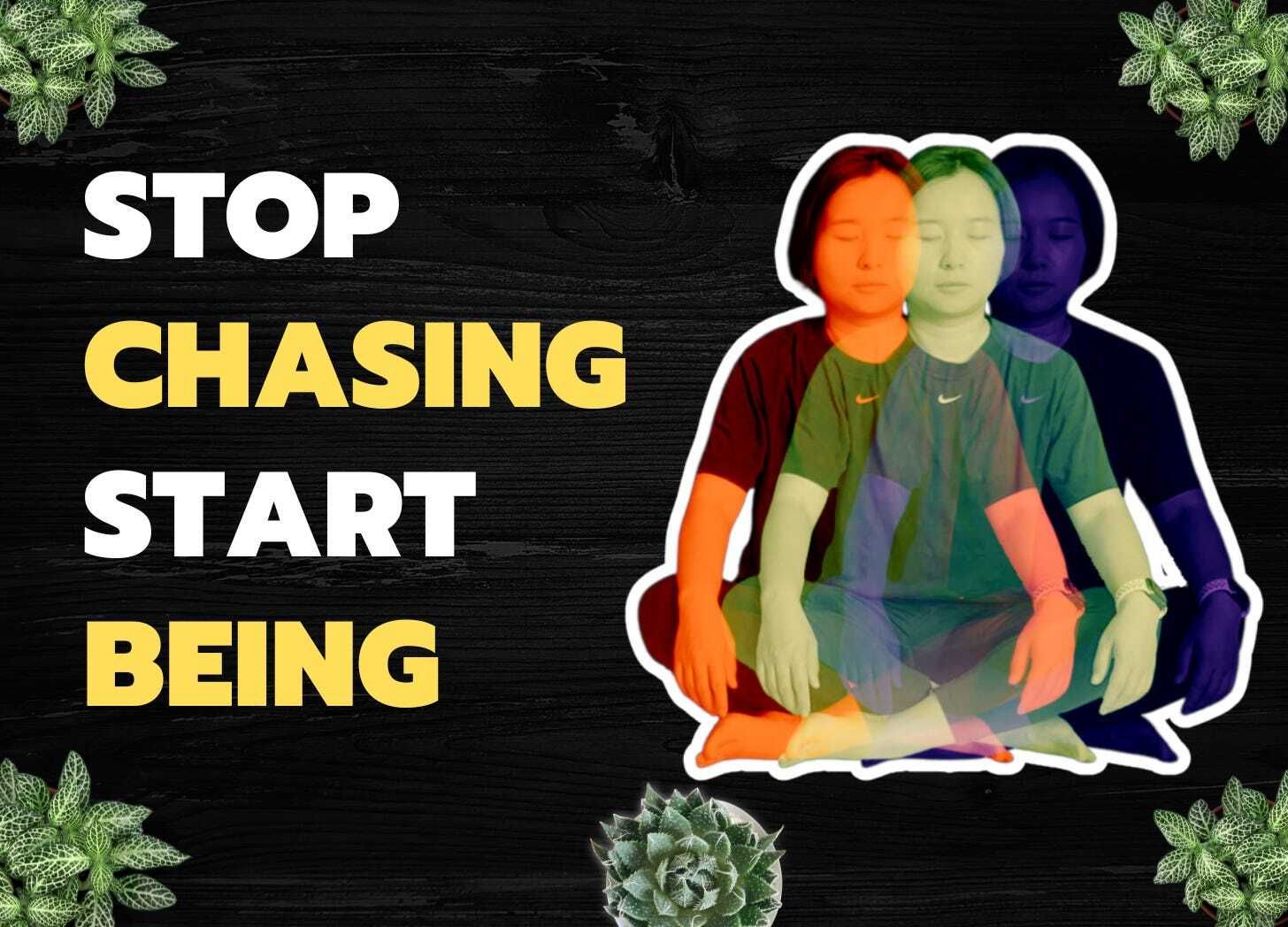
A few months ago, I stood in front of the mirror, looking at the changes in my body, and I couldn't help but think of my past self. Back then, I was slimmer, my skin was tighter, and I was more confident. However, as time went on, my body changed, especially around my waist and hips, and that made me feel disappointed. Despite sticking to exercise and healthy eating, the results never seemed to meet my expectations. Particularly after business trips or vacations, my weight would bounce back. This led me into self-doubt, and I started questioning myself: Why, no matter how hard I try, can't I succeed in losing weight?
This dissatisfaction put me in a state of constant chasing. I began to set stricter goals for myself, always chasing after an ideal body, as if only by reaching a specific number would I truly be happy. But no matter how much I chased, it always seemed like I was just a little short, like a hamster running on a wheel, constantly moving but never getting anywhere.
Chapter 1: A Wake-up Call
While pondering this, one day while running in the park, I suddenly heard a phrase that deeply inspired me:
“Stop chasing, but being.”
This phrase was like a beam of light, illuminating the doubts deep within me. I started to reflect: Why are we always chasing? Chasing a slimmer body, career success, accumulating more wealth… These pursuits seem to have become the norm in our lives, but behind the chase often lies anxiety and unease. No matter what goal we achieve, new anxieties always emerge: What else haven't I reached?
I once learned that by drawing out the dreams you want to achieve and putting the picture on the wall to look at it every day, one day the dream would come true—this is called manifestation. I did it too, but it always felt a bit off. That morning, I suddenly realized that most people misunderstand the true meaning of manifesting. Manifesting is not about constantly striving to reach some external goal, but rather about building a strong core so that it automatically attracts any good things that match it.
Chapter 2: A Paradox from The Subtle Art of Not Giving a F***
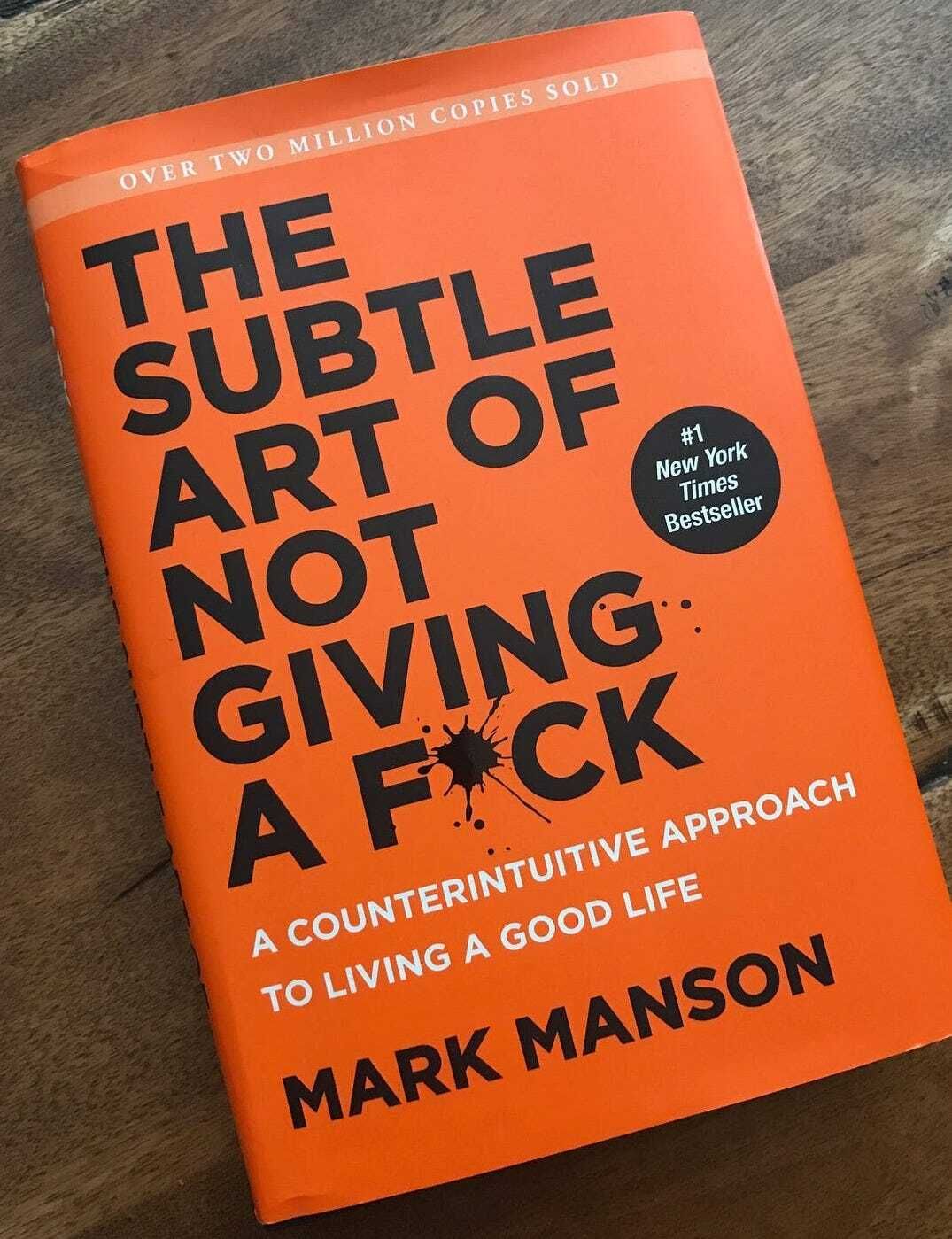
Recently, I’ve been reading the American bestseller The Subtle Art of Not Giving a F**,* and there’s a chapter that helped me perfectly understand the essence of “Stop chasing, but being.” The book mentions a common phenomenon:
“The desire for more positive experiences is itself a negative experience. And paradoxically, the acceptance of one’s negative experience is itself a positive experience.”
The book gives examples of how the harder people try to stand out and achieve extraordinary success, the more likely they are to feel ordinary and unsatisfied when they don’t meet those high standards. It introduces the concept of the “pleasure treadmill,” where people continually chase happiness and positive experiences but end up stuck in an endless cycle of desire and dissatisfaction. For example, someone might buy new luxury goods to find happiness, but that satisfaction quickly fades, pushing them to seek the next source of pleasure.
Viewing the Desire for Positive Experiences as Negative
When we continuously pursue positive experiences, whether it’s success, happiness, weight loss, or social recognition, we unintentionally create a sense of lack within ourselves. This desire stems from the belief that we are incomplete as we are, and we need something external to fill that void. This belief can lead to anxiety, dissatisfaction, and a persistent feeling of inadequacy, because no matter how much we achieve or how much wealth we accumulate, it never feels like enough.
The act of chasing these positive experiences reinforces the deeper notion that we are missing something, turning the pursuit itself into a negative experience.
For example, if we are always seeking validation or trying to achieve the next big success, we are actually operating from a place of lack. We tell ourselves that we’ll only be happy once we get that promotion or reach a certain milestone. This mindset creates an endless loop of dissatisfaction because we focus on what we don’t have rather than appreciating what we already possess.
Viewing the Acceptance of Negative Experiences as Positive
On the other hand, when we accept our negative experiences—our failures, insecurities, or discomforts—we free ourselves from the pressure of constantly trying to change or escape them. This acceptance doesn’t mean we passively endure pain or negative emotions, but rather that we acknowledge these experiences as natural parts of life. By embracing our flaws and the challenges we face, we create a sense of peace and contentment.
Paradoxically, this acceptance can lead to a more positive state. When we stop resisting our imperfections and the inevitable ups and downs of life, we reduce the internal conflict that often causes greater distress. Acceptance allows us to be present, and fully engaged in our reality. It shifts our focus from chasing an idealized life to appreciating the richness and complexity of our actual experiences.
In essence, by letting go of the endless pursuit of positive experiences, we find a deeper sense of fulfillment. Only then can we understand that life is not about constant euphoria but about embracing the full range of human experiences. This paradox reveals that genuine positivity often comes from our willingness to face and accept the negative, rather than avoiding, resenting, or pretending it doesn’t exist. In this acceptance, we find true peace and contentment, naturally leading to positive outcomes.
Chapter 3: Why is Chasing a Human Instinct?
The act of chasing originates from human evolution and the need for survival. It is the drive that ensures we and our offspring reproduce, acquire resources, status, and security. Throughout evolution, the competition for survival, reproduction, and social standing has pushed humans to continually seek better conditions. Therefore, the pursuit of goals (whether it’s food, social status, partners, or wealth) can be seen as an instinctual behavior ingrained through evolution.
From a psychological perspective, chasing is often linked to human motivation and the hierarchy of needs. Maslow’s hierarchy of needs theory suggests that humans have a range of fundamental needs, from basic physiological needs to safety, social connection, esteem, and finally, self-actualization. These needs drive us to pursue more resources, better relationships, and personal development. We chase goals because of unmet needs within us that prompt us to take action.
Additionally, the dopamine system plays a role in chasing behavior. Studies have shown that the anticipation of achieving a goal stimulates the brain to release dopamine, making us feel pleasure and satisfaction. As a result, we’re not just pursuing the end goal; we’re also rewarded during the process of chasing. This mechanism reinforces the instinct to chase.
While the pursuit of a goal is natural, cultural and social environments further amplify this instinct. For example, in modern society, success is often equated with wealth, status, and achievement. The emphasis society places on these goals makes people more inclined to chase external success. So, although chasing may be instinctual, modern societal structures and culture magnify this behavior, making the pursuit even more intense and continuous.
Chapter 4: Why Stop Chasing and Start Being
Since chasing helps us gain more resources, survive, and reproduce, why should we pursue being? Could it threaten our survival?
First, we need to clarify that chasing and being are not entirely opposed; they can complement each other. They represent two different lifestyles and mindsets, and the pursuit of being has its unique value, especially in modern society.
Chasing is indeed part of our survival. It helps us acquire food, resources, status, and security. However, in today’s world, we are no longer in primitive survival mode. The threats we face are no longer wild beasts or extreme environments, but rather psychological pressures, anxiety, excessive competition, and confusion about self-worth. When chasing becomes endless, we often feel exhausted, anxious, and even lose the joy and meaning of life. This is where being becomes valuable, as it helps us find inner peace and satisfaction, no longer driven solely by external goals.
The core value of being is that it helps us find happiness from within, rather than relying solely on external achievements. Chasing goals is often short-lived—once we reach one goal, another quickly appears, trapping us in an endless cycle. Being, on the other hand, allows us to focus on our present experiences and feelings, rather than being overly fixated on future outcomes. This has immense benefits for our mental health. Mindfulness meditation is a great example; research shows that mindfulness practice can reduce anxiety, depression, and increase inner happiness.
Being also means that you not only pursue external success but also focus on internal growth. Through being, you are more likely to discover and nurture your true interests, talents, and inner potential, rather than merely living up to societal standards or external expectations. This inner growth and self-realization lead to long-lasting fulfillment.
While chasing may help with survival, excessive chasing can have negative effects. In modern society, excessive chasing often manifests as an insatiable desire for success, money, and fame, which can lead to stress, anxiety, and even physical and mental health issues. Studies show that being overly goal-driven and obsessed with success can cause us to neglect our health, family, and personal quality of life, ultimately harming our sense of well-being.
Being does not mean you completely stop chasing and abandon all goals, but rather that you learn to pause at the right time and focus on the present. In other words, being helps us break free from the anxiety that chasing brings, allowing us to find inner peace and make wiser choices about what we should pursue. You can still chase goals, but they will no longer dominate your emotions and life.
Being allows us to better understand our priorities and pursue what truly matters with more wisdom, rather than blindly following external expectations or goals. This balance allows you to maintain inner contentment and peace while still chasing what’s important.
In short, chasing is for survival, while being is for the quality and meaning of life.
Chapter 5: Being Includes Both "BE" and "ING"
Some might say, “Stopping the chase and starting to be—doesn’t that just mean giving up?” I’d say, absolutely not. That’s why I must use the English word being to explain this concept, because it’s more accurate. Being encompasses both “BE” (present) and “ING” (action), meaning acting in the present moment.
Being encompasses both “BE” (present) and “ING” (action), meaning acting in the present moment.
Being Includes Action: Spontaneity from Within
Being is not just a calm state of existence; it is a form of action driven by internal motivation, intuition, and a natural state of being. In the state of being, we still take action, but this action is conscious and aligned with our inner desires, not driven by external pressure or fear. Actions in being happen more naturally because our internal state is already aligned with our external goals. This state is not only peaceful but also full of energy, a synchronization with both our environment and ourselves.
This is the essence of manifestation: We don’t need to prove ourselves by chasing external outcomes. Actions naturally arise from inner satisfaction, peace, and a sense of purpose, and the outcomes are merely by-products, not the result of anxiety-driven efforts.
Chasing: Pressure from the Outside In
In contrast, chasing is often driven by external expectations or standards, trying to fulfill an internal void or anxiety by reaching a goal. In this state, actions are taken to fill the lack within, relying on external success or outcomes for validation. Chasing might bring temporary satisfaction, but it is usually accompanied by more pressure, anxiety, and exhaustion.
Chasing actions are often compulsive, driven by the fear of “If I don’t chase, I won’t succeed,” whereas actions in being come from internal confidence and self-acceptance.
Being Is Not Inaction but Conscious Action
People often misunderstand being in a passive state, as if nothing is being done. In reality, being means conscious, intentional action. It doesn’t reject action; instead, it leads to more efficient and spontaneous action. This is because it is not driven by anxiety or the need for external recognition, but rather by internal beliefs and the enjoyment of the process.
In the state of being, action flows naturally. You’ll find that when you are in being, your actions are more focused, effective, and the results come more easily.
So, action can coexist with peace, and success doesn’t necessarily have to come with anxiety or pressure.
Chapter 6: Stop Chasing, Start Being
During my weight loss journey, I realized that true health isn’t about reaching an ideal number on the scale, but about feeling the strength and vitality of the body through a healthy lifestyle. I used to chase after the "perfect body" based on external standards, but now I am gradually shifting my focus to inner feelings, accepting my current state instead of fixating on a specific goal I must achieve. I would think of what the healthy and fit version of Peggie Li would eat, drink, rest, exercise and feel every day, and I just feel that alpha version of myself and behave in her way every moment, from eating, meditating, walking to sleeping. Through this shift, I found that I no longer feel excessive anxiety, but rather, I get my energy recharged each time after every healthy meal, a sweaty exercise, and a restful sleep. In this way of being, a healthy lifestyle is not my burden anymore, but becoming part of my own identity.
This "stop chasing, start being" mindset not only applies to health and weight but can extend to many aspects of life.
Applying It to the Pursuit of Wealth and Career
As someone with clear career goals and a desire to accumulate wealth, I once found myself deeply caught up in the pursuit of financial success. In chasing career success, I always focused on the next goal: the next round of investment for my startup for higher valuation, or the success of the next project. I believed that only by achieving these external benchmarks could I feel at ease. However, as time passed, I realized that this constant chasing did not bring me more satisfaction—it only added more anxiety and pressure.
The "stop chasing, start being" philosophy made me rethink my understanding of wealth and success. Wealth is not just the accumulation of numbers but also your internal state during the pursuit. The same goes for success. When we fixate on external outcomes, we often overlook the real growth and gains we experience in the process. When we learn to exist in being and focus on enjoying each step instead of endlessly waiting for results, wealth and success naturally follow.
I began to believe that success and wealth do not come through anxious and forced chasing, but are instead attracted through a sense of inner calm and presence. When you stop basing everything on future outcomes and instead accept your current state, focusing on creating value, not only do you enjoy the process more, but you also discover that wealth and success are actually by-products of this approach.
Extending It to Parenting Anxiety
This anxiety and chasing don’t just apply to our personal life goals—they can also unknowingly spill over into parenting. I often found myself anxious about whether my child was meeting my expectations. I wanted him to grow taller, to speak more fluently, so I arranged various tutoring sessions to help him meet these goals. However, this over-focus on my child’s development not only left me feeling exhausted, but my child also began to show signs of stress and fatigue. Our whole family was caught in a cycle of chasing "results," and our daily life was filled with anxiety.
I began to reflect on how to apply the "stop chasing, start being" philosophy to parenting. After all, a child’s development is something we cannot completely control; each child has their own growth rhythm. As parents, of course, we hope for their success, health, and happiness, but we must also acknowledge that they are independent individuals, and their growth paths may not align with our expectations.
At this point, I realized that "being" in parenting is about trusting and accepting our children. Just as we learn to accept our own bodies and life circumstances, we also need to accept our children’s unique growth pace. Rather than constantly chasing after the standards they need to meet, we can focus on enjoying the journey of growing alongside them.
Additionally, I started to shift my focus away from anxiety over my child’s achievements to sharing each day with them. Every day brings new learning and growth, and these small moments of progress are more precious than the final outcome. One of the most effective "stop chasing, start being" parenting methods is to keep a journal of the small growth moments we experience together with our children every day, so each day can be filled with a sense of small achievements. As my mindset became more peaceful and even joyful, I noticed my child became more relaxed, showing more curiosity and confidence.
Chapter 7: How to Practice Moving from Chasing to Being in Daily Life
Since chasing is indeed a human instinct, we often unconsciously get drawn into goals, falling into a state of anxiety and pursuit. On the other hand, being, which means truly living in the present, requires conscious practice, especially when facing pressure and external expectations.
Here are some small practices I’ve discovered and tried that can quickly help us shift from chasing to being, with effective results:
Mindfulness Meditation
Mindfulness meditation is a powerful tool that helps us stay aware and present in the moment. It trains us to focus on our breath, bodily sensations, and emotions, rather than being fixated on past disappointments or future goals.
How to practice: Spend 10 to 20 minutes each day practicing mindfulness meditation. Sit in a quiet place, focus on your breath, and gently bring your attention back to your breath whenever your mind wanders. This practice helps you learn to shift your focus away from the anxiety of chasing outcomes and back to the present moment.
Gratitude Practice
Gratitude practice is a highly effective tool that helps us let go of attachment to goals and return to a state of acceptance and appreciation for the present. By acknowledging three things you’re grateful for each night before bed, no matter how small, you can shift your focus from chasing future results to being content with the present.
How to practice: Every morning or night, reflect on three things you’re grateful for that day. By maintaining this practice, you’ll quickly elevate your energy, becoming like a magnet that naturally attracts good things into your life.
Acceptance Practice
Acceptance is not about passively accepting dissatisfaction but realizing that we can’t control everything, especially external changes. By practicing acceptance, we learn to coexist with uncertainty and imperfection, reducing the urge to chase perfection.
How to practice: When you find yourself obsessing over a goal, such as losing weight or gaining wealth, pause and take a deep breath. Then, tell yourself, "This is my current state, and I can allow it to exist." This practice helps build patience and acceptance of the present, instead of constantly pressuring yourself to change.
Body Awareness Practice
Body awareness is a practice that connects your inner and outer worlds, helping you shift from chasing external goals to paying attention to your body’s sensations. Many people chase fitness or health goals, often ignoring their body’s current needs and feelings.
How to practice: You can use yoga, tai chi, or simple stretches, spending 10 minutes each day to feel every part of your body and listen to its feedback. This process helps you focus more on health itself rather than striving for a specific body image.
Decluttering
Tidying up your physical space is a practical way to shift from chasing to being. We accumulate too many unnecessary material things in our lives, which are often attachments to external achievements. By decluttering and simplifying your life, you reduce dependency on external things and focus on inner peace.
How to practice: Choose one hour each week to clear out items you no longer need. By organizing your physical space, you’ll feel lighter and freer mentally, gradually cultivating a relaxed attitude toward external success.
Set Intentions, Not Goals
In daily life, we often drive ourselves with specific goals, but these can easily lead to a chasing mindset. Instead, setting intentions focuses more on the process and experience, rather than a specific outcome.
How to practice: Every morning, set an intention such as, “Today, I will be more mindful of my health,” instead of “I must work out for 1 hour today.” Intentions allow you to focus on your experience, rather than becoming fixated on results.
Applying "Stop Chasing, Start Being" to Parenting
It’s easy to fall into the trap of chasing with our children, especially as parents concerned about their future. This impulse to chase stems from wanting the best for our kids, but excessive expectations and anxiety can negatively affect them. So how do we practice "stop chasing, start being" in parenting? Here are some specific practices to help you find balance:
Accept Your Child’s Uniqueness
Each child has their own pace of growth and personality. As parents, accepting their uniqueness is key. We often want our children to meet certain standards, like speaking more fluently, getting better grades, or being more social, but children are independent individuals, and their growth paths may not align with our expectations. Accepting their uniqueness means letting go of excessive control and respecting their growth rhythm.
How to practice: When you notice you have overly high expectations for your child, stop and ask yourself, “Am I working for their real needs, or am I chasing my idealized expectations?” Try to let go of these preconceived notions and listen more to your child’s needs.
Create a "Being" Atmosphere
Children need a free, safe environment to grow, where they feel accepted and supported. You can create a relaxed, low-pressure family atmosphere to help them break free from excessive competition or performance pressure.
How to practice: Spend time with your child each day, focusing on your interaction rather than the results. For example, when playing or doing creative activities with your child, avoid setting too many goals for them and let them express themselves freely. This aimless “being” time helps your child feel accepted and eases your anxiety about outcomes.
Focus on the Process, Not the Results
Just as we need to focus on the process, not the goal, when practicing being, the same applies in parenting. If we’re always focused on whether our child meets a certain standard, they may feel driven by pressure, losing the joy of exploration and growth. Instead, if we focus on the process, children can enjoy learning and life more fully.
How to practice: When your child faces challenges or needs to grow, encourage them to enjoy the process of learning and exploring, rather than fixating on the outcome. Praise their effort, curiosity, and persistence, rather than just their achievements or performance.
Practice Mindful Parenting
Mindful parenting involves being present with your child and accepting them without judgment, helping reduce anxiety and worry about their future. It emphasizes love and companionship, rather than driving your child’s behavior through expectations.
How to practice: When interacting with your child, focus on the present moment. Don’t imagine what they need to become in the future; fully immerse yourself in the moment. By focusing on present conversations and interactions, you’ll find your relationship with your child becomes closer, and your anxiety about the future decreases.
Set Healthy Boundaries
While being emphasizes accepting and respecting your child’s growth pace, it doesn’t mean letting go of all rules. Healthy parenting still requires rules and boundaries to help children develop discipline and a sense of security. The key is finding a balance, so the rules and goals don’t become a source of anxiety, but instead support healthy growth.
How to practice: Set reasonable rules for your child, such as time for study or household responsibilities, but avoid excessive control or anxiety. More importantly, explain the meaning behind the rules, so they understand rather than feel pressured to achieve a certain outcome.
Self-Awareness and Reflection
Whenever you feel you’re over-chasing with your child, take a moment for self-awareness. Reflect on what’s driving your expectations—is it societal pressure? Or internal worry about your child? Through self-reflection, you can uncover the root of the anxiety and gradually adjust your parenting style.
How to practice: When you feel your expectations are too high for your child, take a few minutes to breathe deeply and ask yourself, “Are these expectations for my child, or for my own peace of mind?” Through continuous self-reflection, you can gradually adjust your relationship with your child and reduce the pressure of chasing.
Final Thoughts
So, giving up chasing and starting to be doesn’t mean giving up action—it means letting go of anxiety and attachment to results. By returning to the present moment, we learn to focus more on inner feelings and growth, naturally attracting the outcomes we truly desire. Most importantly, this is how we create a positive and enjoyable process.
When we focus on being, we no longer need to prove ourselves or seek external validation. True fulfillment and happiness come from inner peace, abundance, and the unconditional love and acceptance we have for ourselves.
When we truly learn being, all the good things in life will come to us naturally—because we’ll be ready to receive them.
Reply